Future Mobility Technologies Showcased by Hyundai Motor Company and Hyundai Rotem
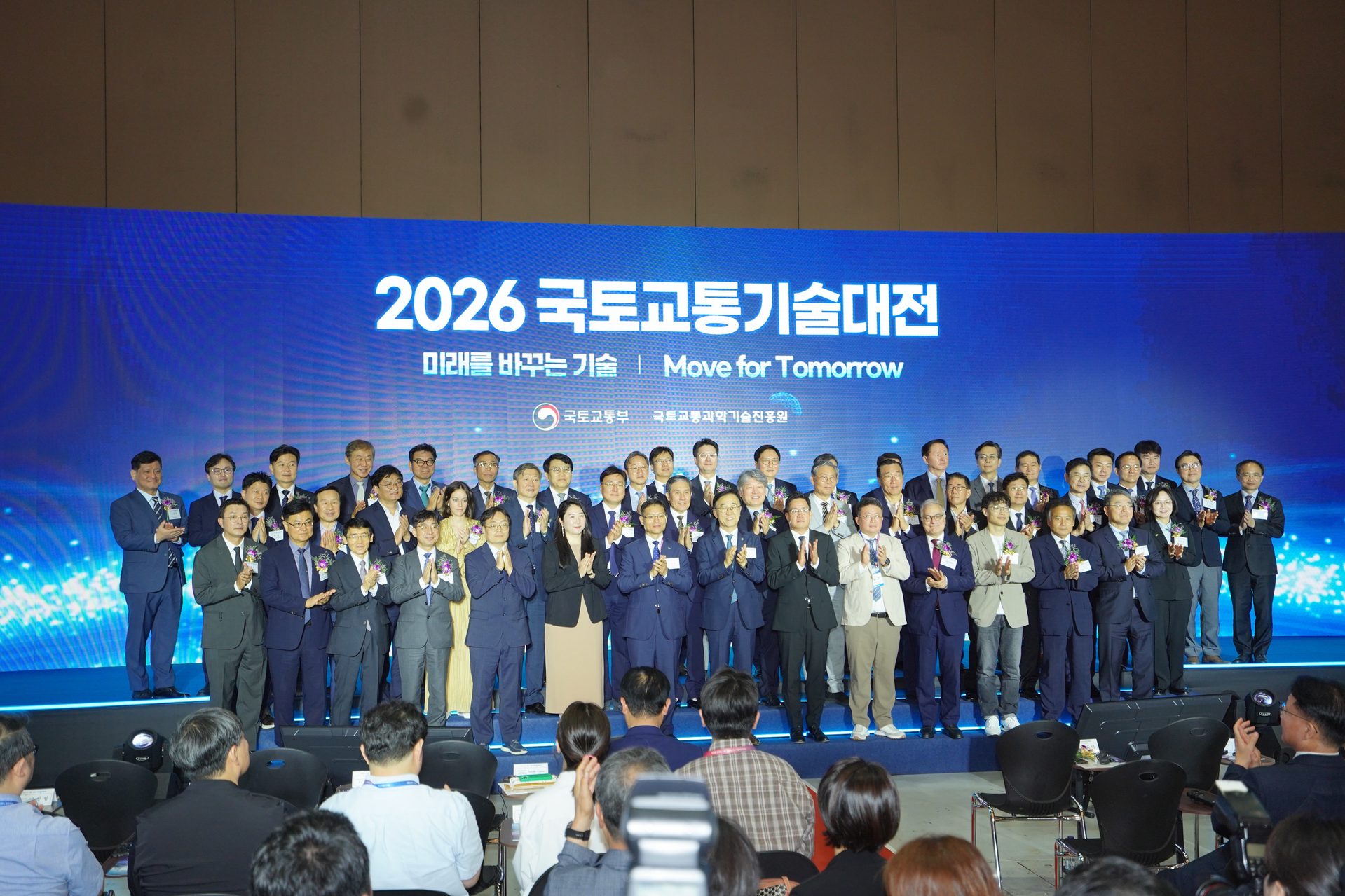
The Land, Infrastructure and Transport Technology Fair is a major exhibition showcasing R&D achievements in the land, infrastructure, and transportation sectors. It is hosted by the Ministry of Land, Infrastructure and Transport (MOLIT) and organized by the Korea Agency for Infrastructure Technology Advancement (KAIA).
Under the theme “Move for Tomorrow,” the 2026 exhibition presented a wide range of technologies and R&D achievements across five thematic zones: Mobility, Smart Construction, AI City, Aerospace, and Innovative Companies.
The opening ceremony, held on June 24, brought together approximately 300 attendees, including government and National Assembly officials, representatives of domestic and international organizations, and experts from industry, academia, and research institutions. The event provided an opportunity to share R&D achievements in the land and transportation sectors and explore the future direction of advanced technologies, including next-generation mobility.
Hyundai Rotem participated alongside Hyundai Motor Company at the Hyundai Motor Group Booth, showcasing the Group’s future mobility capabilities and Hyundai Rotem’s key R&D achievements in railway technology.
The Hyundai Motor Group Booth was organized around four themes: “The Beginning of a New Everyday Life,” “Seamlessly Connected Mobility,” “A Sustainable Journey,” and “Bringing Cities Closer Together.”
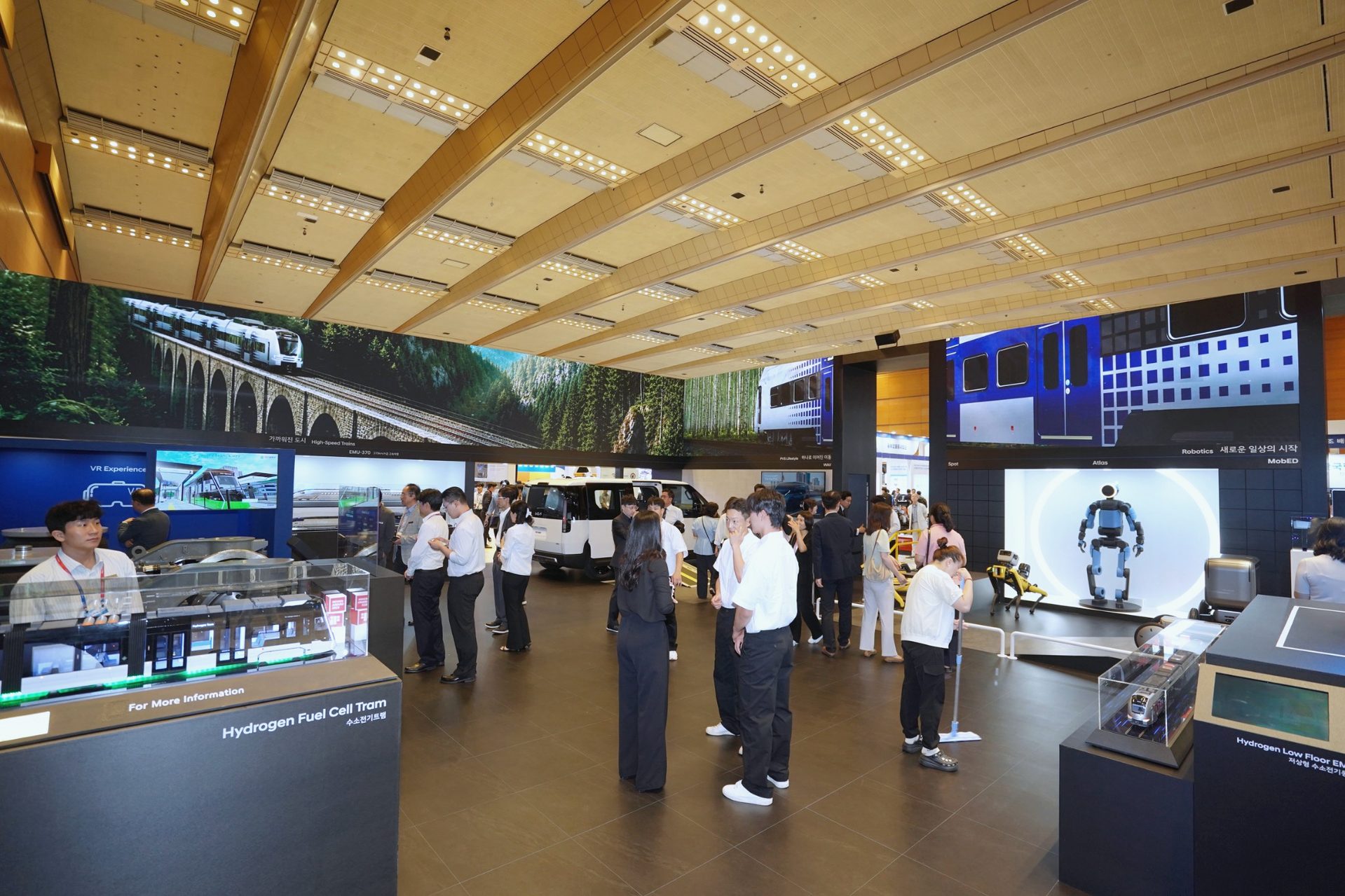
Hyundai Motor Group exhibited a range of robotics and future mobility solutions, including Atlas and Spot robots, the Mobile Eccentric Droid (MobED), and Kia’s PV5 WAV, a wheelchair-accessible vehicle based on its Platform Beyond Vehicle (PBV) concept. These exhibits demonstrated various potential applications of robotics and next-generation mobility technologies.
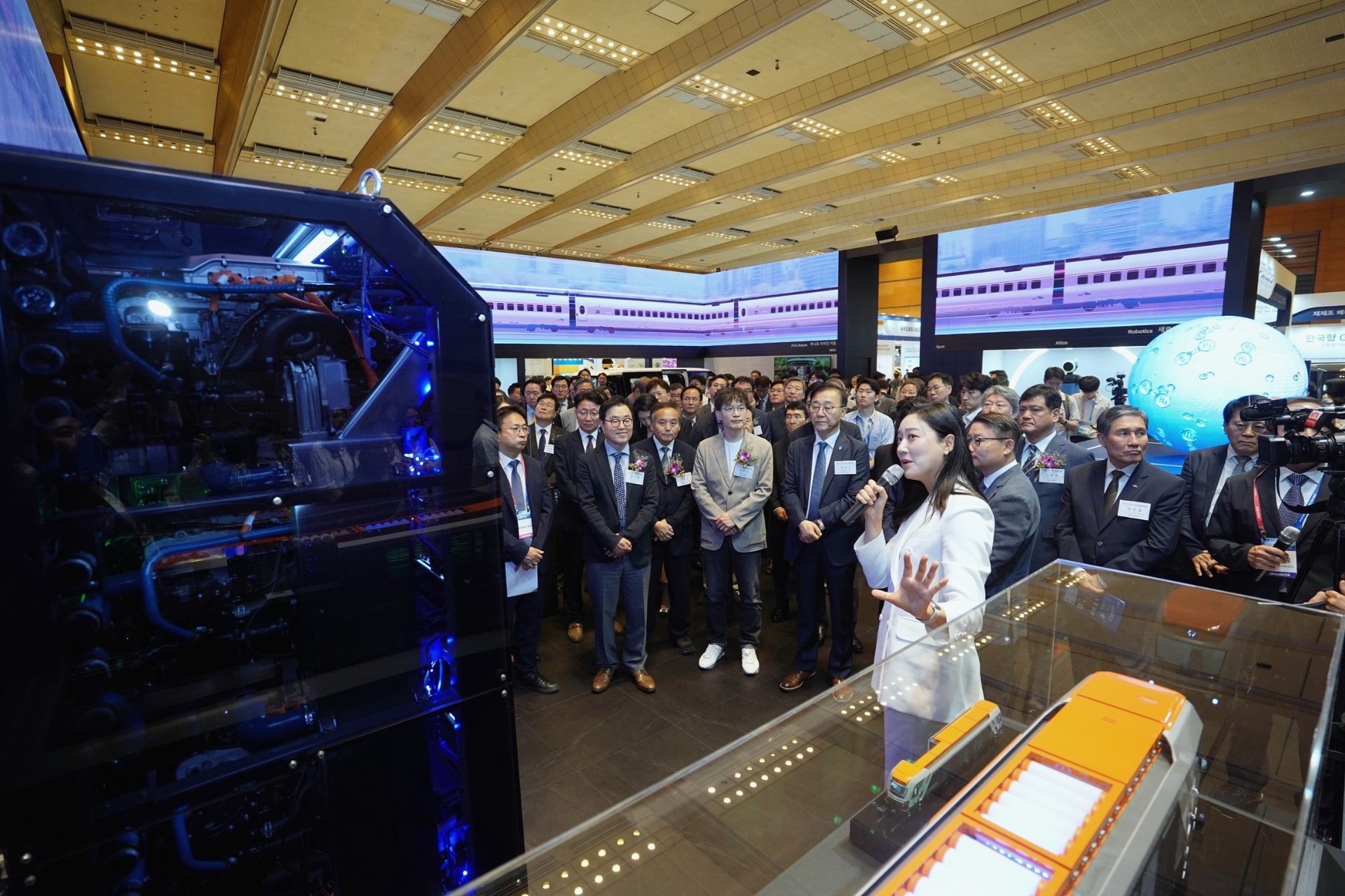
Under the themes “A Sustainable Journey” and “Bringing Cities Closer Together,” Hyundai Rotem showcased its R&D achievements in hydrogen-powered railway technologies, including a 3 MW-class hydrogen-powered locomotive, a hydrogen fuel cell power pack, and a hydrogen-powered tram.
The company also presented its high-speed railway technologies, ranging from the KTX-Sancheon and KTX-Cheongryong to the next-generation EMU-370 high-speed train.
In particular, hydrogen-powered railway technology represents an example of technological convergence, combining Hyundai Motor Group’s expertise in hydrogen fuel cells with Hyundai Rotem’s capabilities in railway vehicle development.
By bringing together technologies developed across the automotive, robotics, and railway sectors, the Hyundai Motor Group Booth highlighted diverse approaches to advancing future mobility.
From Hydrogen-Powered Railways to the EMU-370: Hyundai Rotem’s Key R&D Achievements in Land and Transportation Technology
At the 2026 Land, Infrastructure and Transport Technology Fair, Hyundai Rotem highlighted its major R&D achievements in hydrogen-based railway propulsion systems and next-generation high-speed railway technologies.
Notably, the 3 MW-class hydrogen-powered locomotive and the core technologies for the next-generation EMU-370 high-speed train are being developed or have been developed, respectively, through national R&D projects supported by the Ministry of Land, Infrastructure and Transport (MOLIT).
Through its participation in these projects, Hyundai Rotem has continued to advance its railway technologies, expanding the potential applications of hydrogen-based propulsion systems while enhancing the performance and technological capabilities of high-speed trains.
As an exhibition dedicated to showcasing R&D achievements in the land, infrastructure, and transportation sectors, the event provided a meaningful opportunity to present the progress and outcomes of these national research initiatives.
Expanding Railway Mobility with Hydrogen-Based Propulsion Systems
Hydrogen-powered railway vehicles generate electricity using onboard hydrogen fuel cells. These fuel cells produce electricity through an electrochemical reaction between hydrogen and oxygen, while an integrated propulsion system combining fuel cells and batteries supplies the power required to operate the vehicle.
One of the key technical characteristics of this system is its ability to operate without external overhead power lines. This makes hydrogen-based propulsion a potential option for non-electrified routes or operating environments where installing overhead electrification infrastructure presents challenges.
Hyundai Rotem has accumulated expertise in hydrogen-powered railway technologies through the development and demonstration of hydrogen-powered trams. The company has signed contracts to supply hydrogen-powered trams for Daejeon Metro Line 2 and the Jangsaengpo area in Ulsan, with commercialization efforts underway.
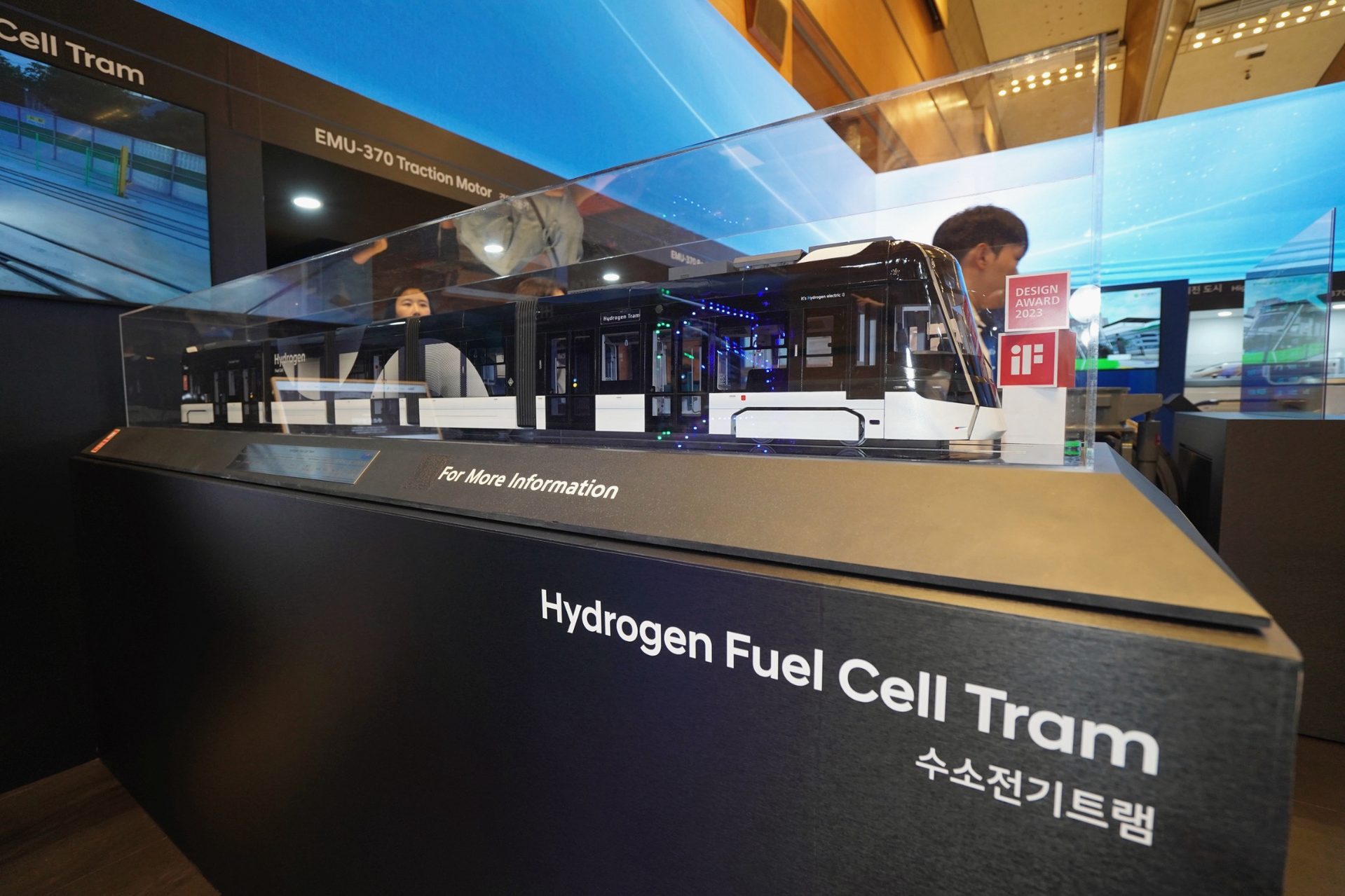
Hyundai Rotem has also pursued the development of low-floor hydrogen-powered trainsets and hydrogen-powered locomotives to expand the application of hydrogen-based propulsion technologies across different types of railway vehicles.
In particular, the 3 MW-class hydrogen-powered locomotive is being developed as part of a national R&D project supported by MOLIT, aimed at securing core technologies for hydrogen-based propulsion systems that could replace aging diesel locomotives.
Hyundai Rotem is participating in the project to develop high-output propulsion technologies capable of meeting the power requirements of locomotive operations. This involves the efficient integration of high-capacity hydrogen fuel cell systems, batteries, and power conversion equipment.
At the exhibition, Hyundai Rotem presented its R&D achievements in the core technologies of hydrogen-powered locomotives and hydrogen fuel cell power generation systems, highlighting their potential applications across various types of railway vehicles.
The environmental benefits of hydrogen-powered railway vehicles depend on factors such as operating conditions and how hydrogen is produced and supplied. Therefore, developing propulsion systems that deliver appropriate performance and efficiency under different railway operating conditions remains essential.
Advancing Next-Generation High-Speed Railway Technology: EMU-370
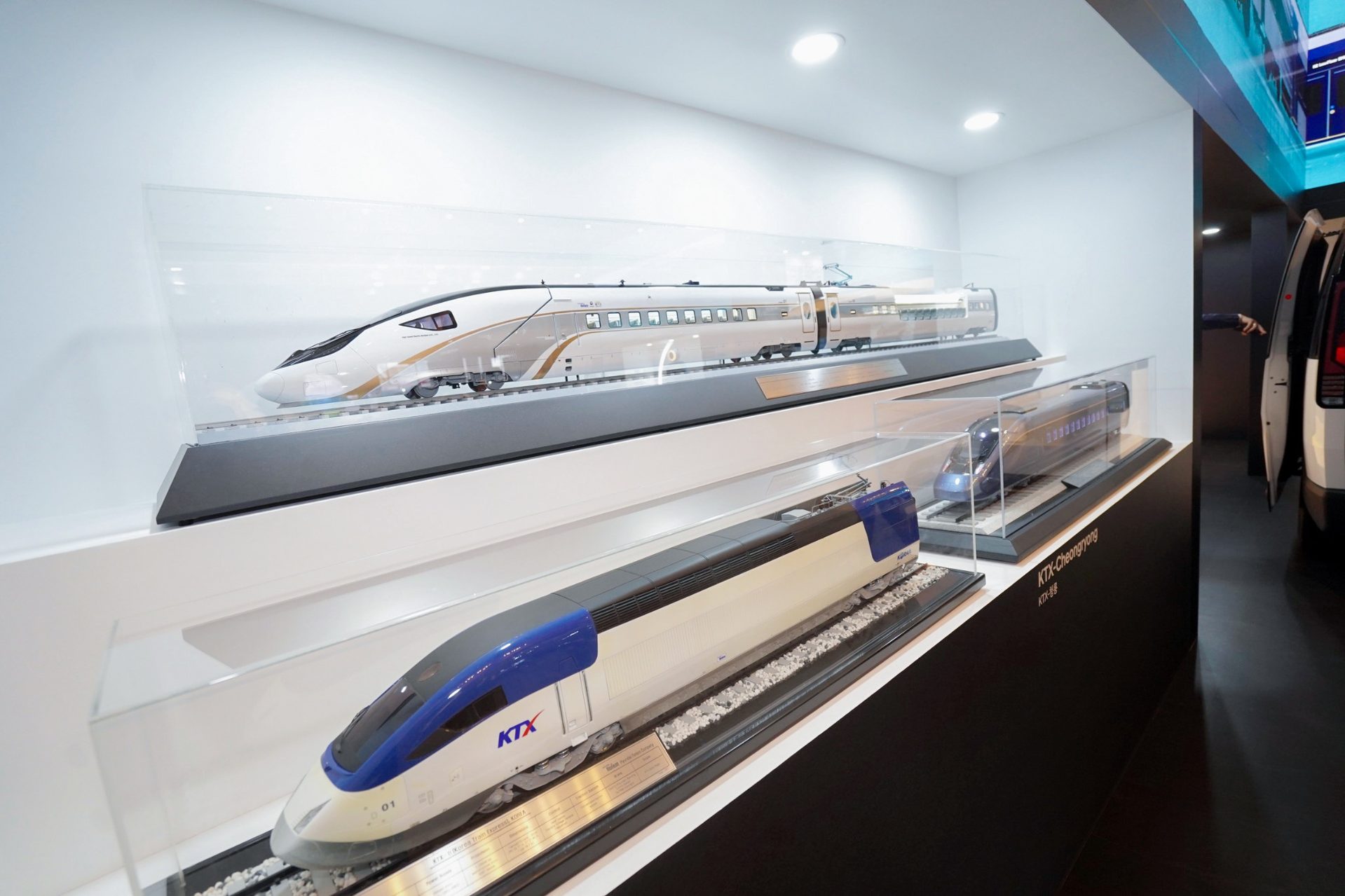
Alongside its hydrogen-powered railway technologies, Hyundai Rotem showcased its achievements in developing core technologies for the next-generation EMU-370 high-speed train.
Hyundai Rotem has accumulated extensive technological expertise in high-speed rail through the development and production of trains such as the KTX-Sancheon, KTX-Eum (EMU-260), and KTX-Cheongryong (EMU-320). The latter two are electric multiple-unit trains featuring distributed traction systems.
Building on its experience in high-speed rail development, Hyundai Rotem participated in a national R&D project supported by MOLIT to develop core vehicle technologies and proposed revisions to technical standards for railway operations at speeds of 370 km/h and above.
Led by the Korea Railroad Research Institute (KRRI), the collaborative project brought together Hyundai Rotem and other industry, academic, and research partners. Through this initiative, the participating organizations completed the development of core technologies for the EMU-370, a next-generation distributed-traction high-speed train designed to achieve a maximum commercial operating speed of 370 km/h.
As train operating speeds increase, aerodynamic drag, noise, and vibration also become more significant, while greater demands are placed on propulsion systems.
Achieving high-speed performance therefore requires comprehensive technological advancements in aerodynamic design, propulsion systems, running gear, and ride comfort.
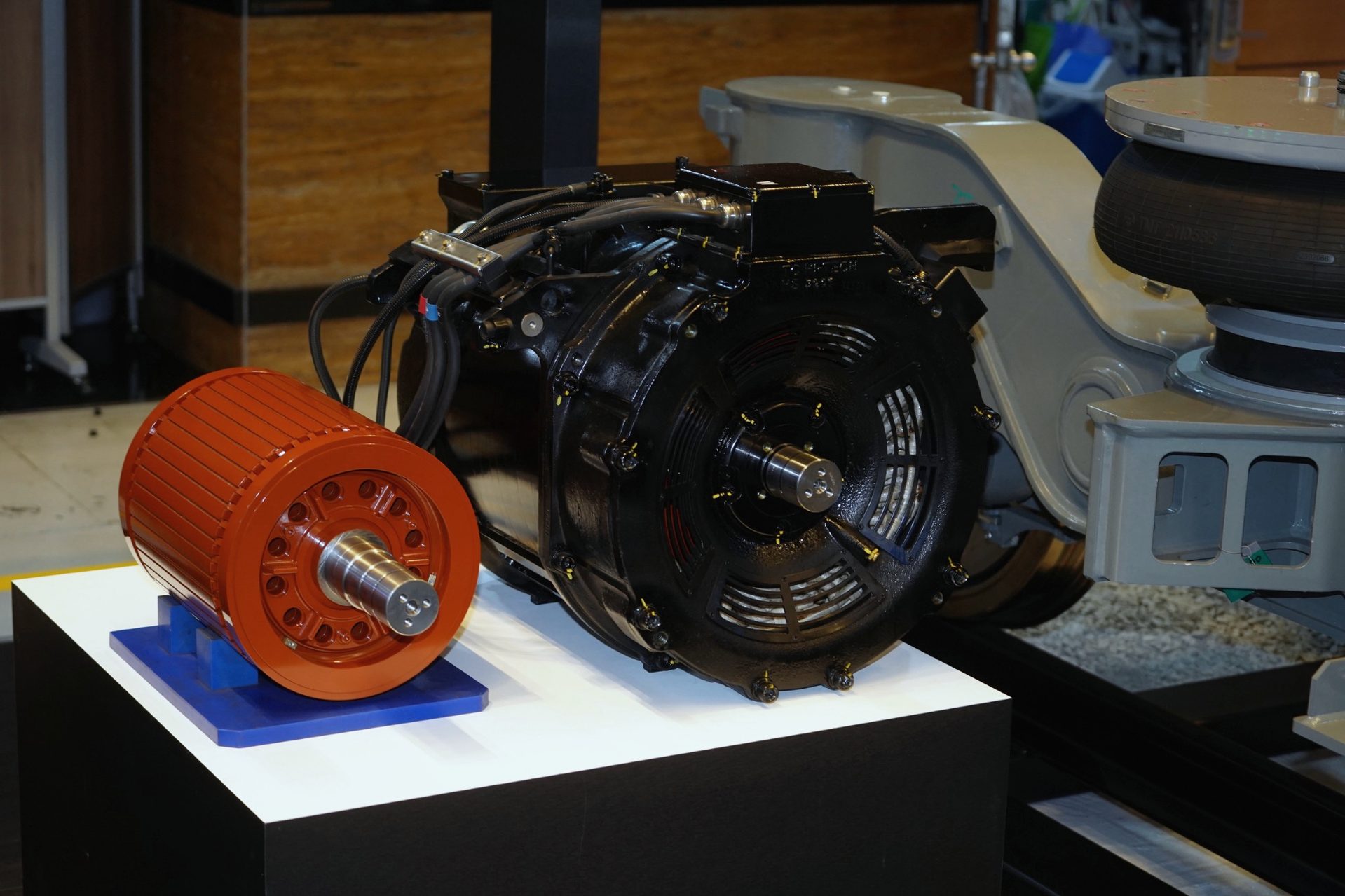
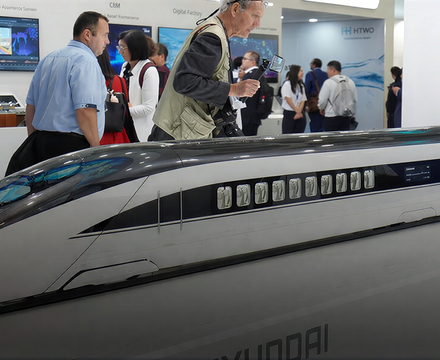
At the exhibition, Hyundai Rotem showcased an EMU-370 model alongside prototypes of a 560 kW-class high-output traction motor and bogie, highlighting its achievements in developing core technologies for next-generation high-speed rail.
A traction motor is a key component that converts electrical energy into the rotational mechanical power required to propel a train. The high-output traction motor developed for the EMU-370 was designed with power density and cooling performance in mind to meet the demands of higher operating speeds.
A bogie is a critical running gear assembly that supports the vehicle body and enables the train to travel along the tracks through its wheels and axles. In high-speed railway vehicles, bogies play an essential role in maintaining running stability and controlling vibrations transmitted from the tracks.
Hyundai Rotem has developed core bogie technologies designed to meet the demands of high-speed operations, establishing a technological foundation for enhancing the running performance of next-generation high-speed trains.
The company has also conducted extensive R&D to enhance the operating performance of next-generation high-speed trains, including technologies for reducing aerodynamic drag and managing noise and vibration.
The development of the EMU-370’s core technologies represents more than an effort to increase maximum train speed. It has established a technological foundation for achieving the safety, operational performance, and ride comfort required for high-speed railway operations.
Expanding the Future of Railway Technology Through AX and Physical AI
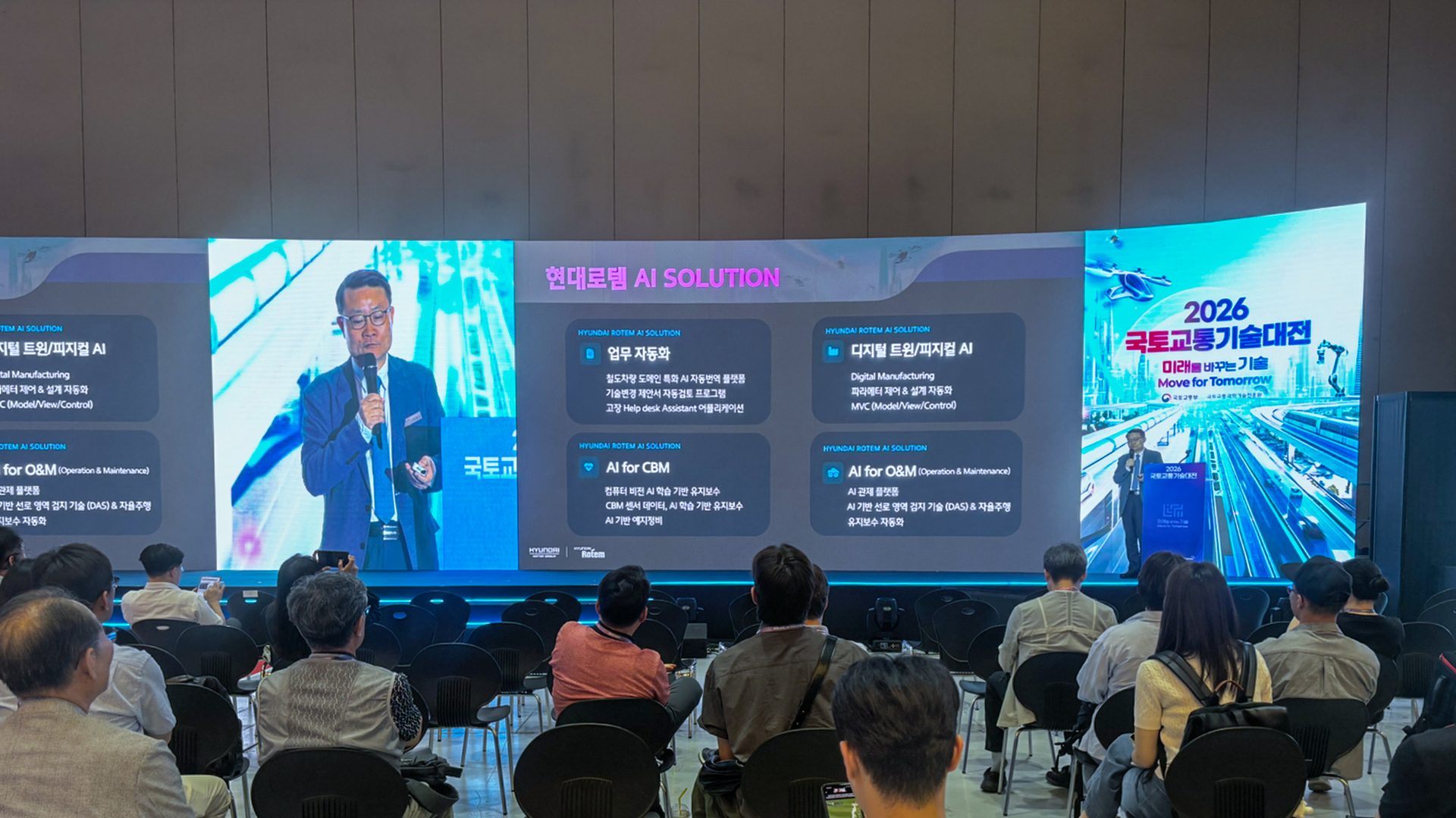
In addition to showcasing its railway technologies, Hyundai Rotem shared its perspectives on the future direction of the railway industry during a strategic technology seminar.
On June 26, the final day of the exhibition, Won-sang Lee, Chief Technology Officer (CTO) of Hyundai Rotem, delivered a presentation titled “AX and Physical AI Applications in Railway Mobility.” The presentation explored the potential applications of AI Transformation (AX) and Physical AI technologies in the railway industry.
AX in the railway sector aims to improve operational efficiency and performance by integrating AI technologies across various processes, from vehicle design and manufacturing to operations and maintenance.
Hyundai Rotem outlined several potential applications of AI in railway technology, including AI-based technical document analysis and workflow automation, design and manufacturing process verification using digital twins, and condition-based maintenance (CBM), which analyzes vehicle condition data to support maintenance decisions.
The company also introduced Physical AI technologies that use sensors such as cameras, LiDAR, and radar to perceive and interpret surrounding environments. These technologies have potential applications in real-world railway operations, including obstacle detection and driving safety assistance for trams.
The presentation demonstrated how Hyundai Rotem’s technology development is expanding beyond railway propulsion and driving performance toward greater intelligence across design, manufacturing, and operations.
Shaping the Future of Mobility with Hyundai Motor Group’s Technologies
The 2026 Land, Infrastructure and Transport Technology Fair provided an opportunity for Hyundai Rotem to participate alongside Hyundai Motor Company at the Hyundai Motor Group Booth, showcasing the Group’s diverse future mobility technologies and Hyundai Rotem’s R&D achievements in the railway sector.
Although Hyundai Motor Group’s robotics and future mobility technologies and Hyundai Rotem’s hydrogen-powered and next-generation high-speed railway technologies serve different applications, they share a common objective: developing technologies that enhance transportation efficiency and convenience.
Through the exhibition, Hyundai Rotem highlighted its progress in hydrogen-based railway propulsion systems and the core technologies of the EMU-370. The company also presented its vision for the future of railway technology through the application of AX and Physical AI during the strategic technology seminar.
By showcasing technologies developed or being developed through national R&D initiatives supported by MOLIT, including the 3 MW-class hydrogen-powered locomotive and the core technologies for the EMU-370, Hyundai Rotem demonstrated its contributions to advancing railway technology through collaborative research and development.
Moving forward, Hyundai Rotem will continue to advance its R&D efforts in hydrogen-based railway propulsion systems, next-generation high-speed rail, and AI-powered railway technologies, drawing on Hyundai Motor Group’s mobility expertise and its own accumulated experience in railway technology development.